How to Attract Parents to Your Indoor Playground
How to attract parents to your indoor playground starts with understanding what parents are really buying. They want their child to run, climb, laugh, and feel special. They also want a clean bathroom, clear prices, easy booking, friendly staff, and a safe place where they can sit down without losing sight of their child.
Kids create the demand. Parents make the decision.
That means your play structure matters, but the full parent experience decides whether a family books a birthday party, buys a membership, leaves a good review, or recommends you in a local Facebook group. Parents judge your Google profile, photos, reviews, pricing, cleanliness, party rooms, and staff before they ever walk in.
Here’s how to make that decision easier for them. If you are preparing to open a new location, start by following our detailed indoor playground grand opening marketing playbook.
How Parents Choose an Indoor Playground
Most parents start with local search. They type phrases like “kids birthday party near me,” “indoor play area for toddlers,” “soft play near me,” or “best indoor playground birthday packages.” They also check maps, social media, school chats, and local parent groups.
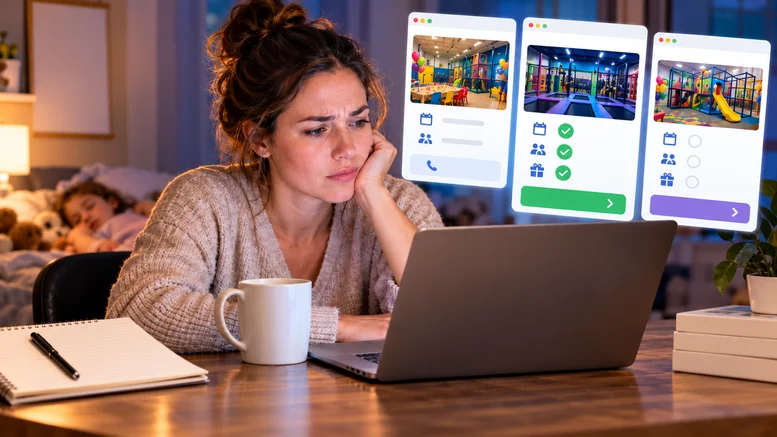
The journey is fast and emotional. A parent may be planning during a lunch break or between school pickup and bedtime. If your hours are outdated, prices are hidden, photos are poor, or the booking page is clumsy on mobile, they may leave in seconds.
Research from Chuck E. Cheese shows that safety ranks very high for parents choosing a birthday venue, while a child’s preference strongly shapes the final choice. That matches real-world behavior: children ask for the fun place, then parents check if it feels safe, clean, fair, and easy.
Parents usually ask:
- Will my child love it?
- Does it look safe?
- Is it clean?
- Can I understand the price?
- Can I book without a phone call?
- Will staff make the visit easier?
- Would I feel comfortable inviting other parents here?
Your marketing should answer those questions quickly.
Make Safety Visible in Your Indoor Playground
Safety claims are easy. Visible safety is harder, and it matters more.
Parents want to see a single monitored entrance, clear check-in, staff presence, age-zoned play areas, padded flooring, equipment checks, and good sightlines. The first 10 to 20 feet inside your venue are critical. Parents scan for exits, staff, bathrooms, toddler zones, seating, and possible chaos.
If the front desk feels disorganized, children can run near the exit, or staff look distracted, trust drops. If the entry is calm, clean, and easy to understand, parents relax faster.
Add a simple safety section to your website and make it specific:
- single monitored entry and exit
- separate toddler and big-kid zones
- daily equipment checks
- posted play rules
- digital waivers
- clear emergency process
Use plain language. “We inspect the play structure every morning before opening” feels stronger than “safety is our top priority.” Documenting this with a strict safety inspection checklist helps reinforce this trust.
As playground safety guidance from RoSPA often explains, good play includes challenge with sensible risk management. Parents do want climbing, jumping, sliding, and movement. They also want proof that avoidable hazards are handled.
Treat Cleanliness Like a Sales Tool
Cleanliness is one of your strongest marketing channels. Parents notice sticky tables, dirty socks, dusty corners, overflowing bins, and bathrooms that need attention. They also mention those details in reviews.
Make cleaning visible. Staff should wipe tables, reset party rooms, check bathrooms, sanitize high-touch areas, and remove damaged toys or mats during open hours. A posted cleaning checklist near bathrooms or play entrances can reassure parents without a long speech.
The CDC gives practical hygiene guidance around clean hands and clean surfaces. For an indoor playground, that translates into simple habits:
- hand sanitizer near entrances, exits, food areas, and bathrooms
- bathroom checks every 30 to 60 minutes during busy periods
- clean party tables before the host arrives
- clear sock rules before checkout
- quick removal of broken or dirty play items
- visible staff cleaning during peak sessions
One useful operator rule is: “If a parent has to wonder whether it was cleaned, the answer already feels like no.” You don’t need to make the venue feel clinical. You need to make care visible.
Show Real Photos and Short Videos
Parents want to picture their own child in your space.
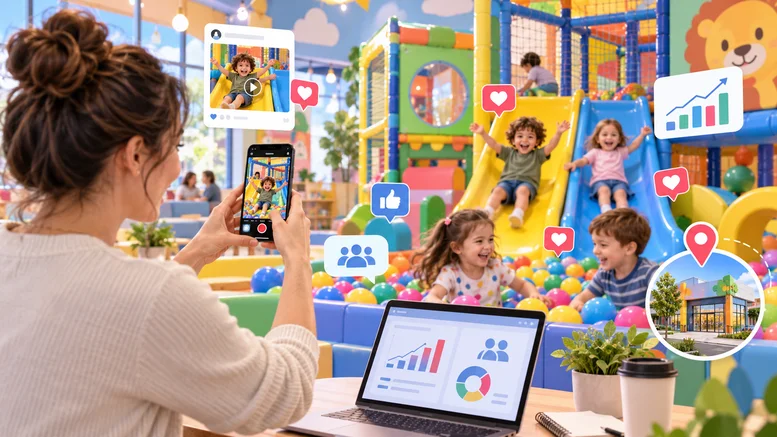
Your website, Google Business Profile, and social channels should show the actual venue: toddler area, climbing frames, slides, party rooms, cafe seating, check-in desk, bathrooms, staff, food, and birthday setup. Avoid dark, empty, over-edited photos. Use bright, recent, practical visuals.
Short video works especially well for indoor playground marketing. Film:
- a 30-second birthday party journey
- a first-time toddler visit
- a staff member preparing a party room
- a quick cleaning reset
- a parent seating view toward the play area
- a walkthrough from entrance to play zones
For a complete campaign blueprint on turning these visuals into paid visits and party deposits, explore our guide on how to market an indoor playground on Facebook and Instagram.
Make Birthday Booking Fast and Clear
Birthday parties bring strong revenue, but parents abandon confusing booking pages. If they must call for prices, wait for a reply, or complete a long form before seeing basic information, many will choose another venue (for a step-by-step breakdown of where parents drop off, see our guide on fixing your birthday party booking funnel).
Your birthday page should show:
- package price
- number of children included
- extra child cost
- party duration
- play time and room time
- food and drink inclusions
- cake policy
- grip sock policy
- deposit amount
- refund or reschedule rules
- optional add-ons
- available dates or a clear booking request
The checkout should work on a phone. Keep forms short. Allow guest checkout. Use autofill where possible. Show taxes, service fees, mandatory socks, cleaning fees, and gratuity policies before the final payment screen.
The Baymard Institute has long tracked checkout abandonment, and unexpected costs remain a major reason people quit purchases. Indoor playground parties face the same problem. Surprise fees damage trust fast.
If you currently use “Call for pricing,” replace it with real numbers. If pricing varies, show starting prices and examples:
“Classic Party: $299 for 10 children. Extra children $18 each.”
“Private hire starts at $850 for two hours. Final price depends on day, time, and guest count.”
“Themed decor upgrades usually range from $150 to $400.”
That gives parents enough information to decide.
Design for Parent Comfort
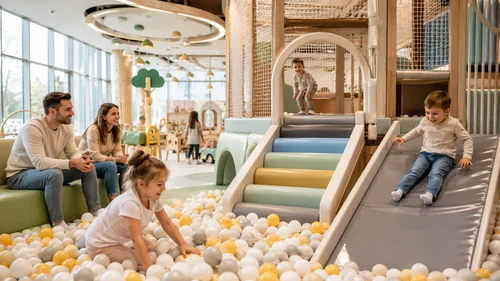
Children may drive the first visit, but parent comfort drives repeat visits. A parent who can sit comfortably, see the play area, drink good coffee, and order food without hassle will stay longer.
Your parent area should include:
- seating with clear sightlines
- enough stroller space
- clean tables
- charging points
- simple food ordering
- good coffee and water
- manageable noise
- easy access to bathrooms
This directly affects revenue. Longer visits create more cafe sales, more arcade play, more memberships, and more chances for parents to invite friends.
The International Association of Amusement Parks and Attractions regularly focuses on guest experience and repeat visitation in attractions businesses. For an indoor playground, the parent lounge is part of that experience. Treat it as revenue space, not leftover square footage.
Train Staff Around Parent Anxiety
Staff can make a decent venue feel excellent. They can also make a strong venue feel careless.
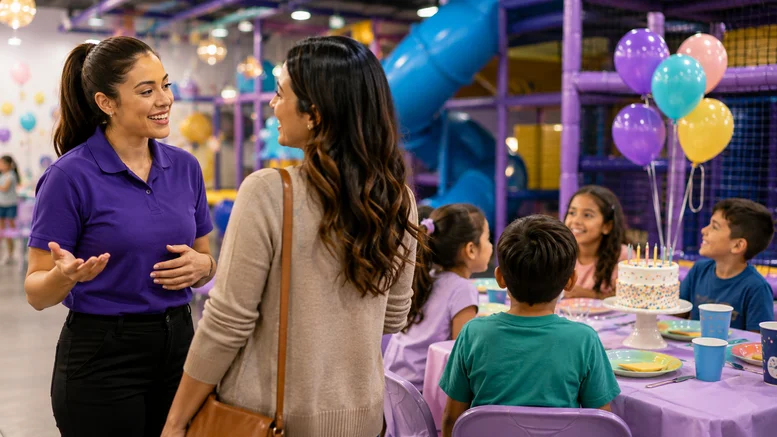
Parents notice whether the front desk smiles, whether party hosts take control, whether someone helps a nervous toddler, and whether rough play gets handled quickly. Train for these moments.
Good staff habits include:
- greeting every family clearly
- explaining the layout to first-time visitors
- pointing out bathrooms, toddler areas, and seating
- handling waivers without frustration
- checking in with birthday hosts before food and cake
- stepping in when play gets unsafe
- thanking families as they leave
For birthday parties, the host should own the timeline. Parents should not be hunting for candles, plates, drinks, trash bags, or the next activity. A strong standard is: “The parent should feel like a guest at their own child’s party.”
That one idea can improve your whole party operation.
Create Offers for Different Parent Needs
Parents don’t all buy the same thing. Build offers around real situations.
First-time toddler parents need reassurance. Promote toddler mornings, smaller party packages, calm sessions, parent-child play, and soft play areas with strong sightlines.
Parents of children aged 5 to 9 want movement and variety. Show climbing, slides, obstacle courses, games, party energy, and group fun.
Parents of older children need novelty. Try glow nights, ninja-style challenges, arcade bundles, competitions, and private events.
Budget-conscious families need clear value. Offer weekday discounts, sibling passes, off-peak birthdays, structured summer camps, and simple memberships.
Convenience-driven parents want full service. Offer premium party packages, food bundles, decor upgrades, digital invitations, private rooms, and hosted timelines.
When your packages match real parent problems, your marketing gets sharper.
Make Your Indoor Playground More Inclusive
More parents look for venues that support sensory needs, anxiety, allergies, disabilities, and different play styles. Inclusion can become a clear reason to choose your venue.
Start with practical steps:
- low-sensory sessions with reduced music and smaller crowds
- quiet corners or calm rooms
- visual party schedules
- allergy-aware food policies
- flexible cake rules for medical needs
- staff training around sensory overload
- accessible routes where possible
Local accessibility requirements vary by facility, but the business logic is simple: when more families feel welcome, more families book.
Turn Birthday Guests Into Future Customers
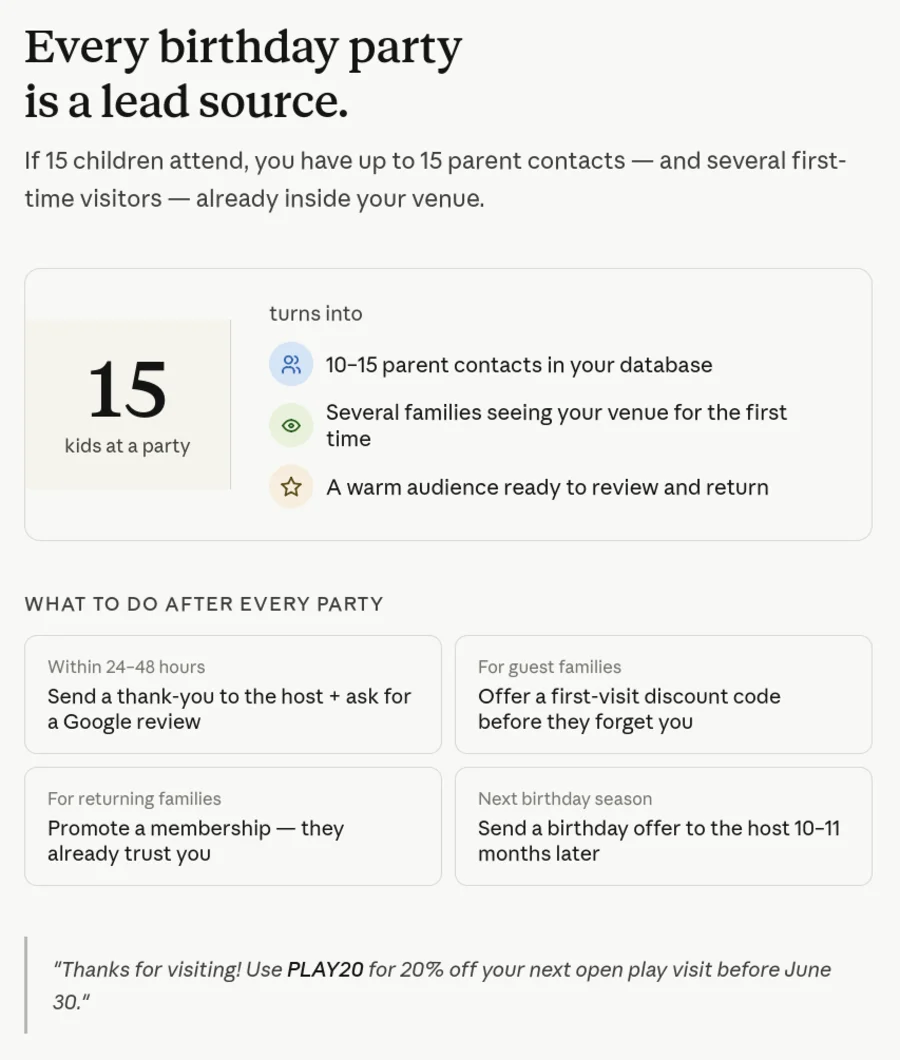
Every birthday party is a lead source. If 15 children attend, you may have 10 to 15 parent contacts and several first-time visitors in the building.
Use digital waivers and booking software to follow up:
- send a thank-you message to the host
- request a review within 24 to 48 hours
- offer guest families a first-visit discount
- send a future birthday offer
- promote memberships to returning families
Keep the message short. Example:
“Thanks for visiting PlayTown this weekend. Use code PLAY20 for 20% off your next open play visit before June 30.”
That’s enough to bring a family back without overwhelming them.
Win Local Search and Reviews
Your Google Business Profile needs regular care. Update hours, holiday schedules, phone number, booking links, birthday page links, photos, videos, services, FAQs, and pricing highlights.
Ask happy customers for reviews while the visit is fresh. The best reviews mention specific parent concerns: clean, safe, toddler-friendly, easy booking, friendly staff, great party host, good coffee, indoor play near me.
Never buy fake reviews. Parents read patterns. A few specific reviews beat dozens of empty ratings.
Also study complaints. Common review triggers include late-disclosed sock fees, unclear food rules, dirty bathrooms, overcrowding, disappearing party hosts, and confusing refund policies. Sort complaints into communication issues and operations issues. Fix both.
What Parents Remember
Parents remember how the visit felt. They remember whether their child was happy, whether staff helped, whether the bathroom was clean, whether the bill matched the website, and whether they could sit down for a few minutes and breathe.
If you want to attract more parents to your indoor playground, remove doubt at every step:
- be easy to find
- show real photos
- make safety visible
- keep cleaning obvious
- publish clear prices
- simplify booking
- train staff well
- design for parent comfort
- follow up after visits
- ask for reviews
- create reasons to return
The best indoor playgrounds don’t rely on one clever campaign. They make parents feel confident before, during, and after the visit. That confidence turns into bookings, repeat visits, memberships, and word-of-mouth.