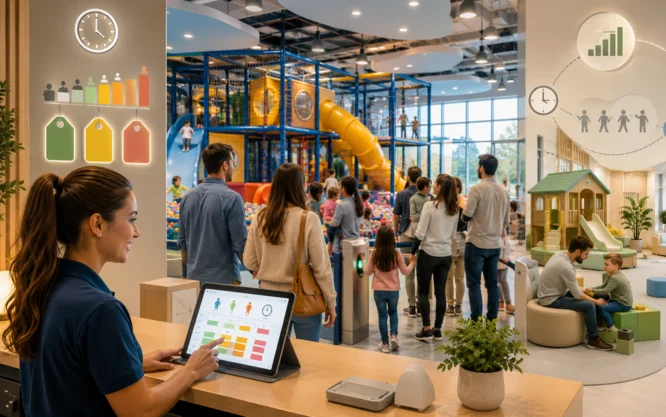
Dynamic Pricing for Indoor Playgrounds
Dynamic Pricing for Indoor Playgrounds means adjusting prices by demand, capacity, time, package value, or booking behavior so your busiest slots earn more and your quiet slots become easier to sell. For Indorro playground owners and managers, the best version is simple: clear public rules, predictable price bands, and pricing changes tied to real operating patterns rather than guesswork.
Indoor playground demand is rarely even. Saturday birthday slots can sell out while Tuesday mornings stay empty. School holidays can overwhelm the front desk, while sunny summer afternoons may drag. A fixed price is easy to manage, but it often treats your best hours and weakest hours as if they have the same value.
Dynamic pricing helps you shape demand instead of reacting to it. The goal is not to surprise parents at checkout. The goal is to make pricing match the way families actually book, visit, and spend.
What dynamic pricing should do for an indoor playground
Dynamic pricing should help your playground fill more low-demand sessions, protect capacity during peak times, and increase revenue from limited assets such as party rooms.
In practice, dynamic pricing can help you:
- Charge more for high-demand birthday slots.
- Offer better weekday prices without discounting every visit.
- Encourage earlier bookings with advance-purchase pricing.
- Reduce crowding during peak play sessions.
- Increase spend per guest through better packages and add-ons.
- Give staff a pricing structure they can explain in one sentence.
The best pricing rules feel fair because customers can understand them. Parents already expect different prices for peak and off-peak times in travel, entertainment, and events. Indoor playgrounds can use the same logic, but the rules need to be visible before checkout.
Start with capacity, not price
An indoor playground should build dynamic pricing around capacity first because capacity is the real constraint. Before changing prices, decide what you are trying to protect.
Track these numbers for at least four to eight weeks:
| Area | What to track | Why it matters |
|---|---|---|
| Open play | Guests per session, day, and hour | Shows which sessions need demand shaping |
| Birthday parties | Room occupancy by time slot | Reveals premium and weak party slots |
| Add-ons | Attach rate by package and channel | Shows where package value can improve |
| Staffing | Labor cost by daypart | Helps avoid discounts that create unprofitable traffic |
| No-shows | Booking cancellations and missed visits | Helps set deposit and cancellation rules |
Do not start with a blanket weekend price increase. Start by finding the specific moments where demand exceeds supply or where capacity sits unused.
For example, a playground may discover that Saturday 2:00 p.m. party rooms sell quickly, Sunday morning parties sell slowly, and weekday open play is strongest only when toddler groups are active. Those three patterns need three different pricing decisions.
Where dynamic pricing works best
Dynamic pricing works best when the customer can see a clear reason for the price difference. Indoor playgrounds should usually begin with time, booking window, package type, and capacity level.
Peak and off-peak play sessions
Peak and off-peak pricing is the simplest starting point. Charge a standard rate during busy periods and offer a lower rate during quieter sessions.
A practical structure might look like this:
| Session type | Pricing rule | Best use |
|---|---|---|
| Weekday morning | Lower entry price or toddler bundle | Attract parents with younger children |
| Weekday afternoon | Standard price | Capture after-school demand |
| Weekend morning | Peak price | Protect high-demand family time |
| Weekend late afternoon | Value price | Fill weaker weekend hours |
| School holidays | Holiday price band | Manage higher traffic and staffing needs |
Keep the number of bands small. Three bands are usually enough: value, standard, and peak. If the price calendar looks complicated to your team, it will feel complicated to parents.
Birthday party slots
Birthday party rooms are a strong candidate for dynamic pricing because each time slot has limited supply. A room sold for Saturday afternoon cannot be sold twice.
Instead of using one party price for every slot, set a base package and adjust by demand:
| Party slot | Suggested pricing logic |
|---|---|
| Saturday afternoon | Highest room or package price |
| Saturday morning | Slightly lower than afternoon |
| Sunday afternoon | Standard or peak, depending on demand |
| Friday evening | Value price or bonus add-on |
| Weekday party | Lower minimum spend or smaller deposit |
This is also where packaging matters. You may not need to raise the headline price sharply if you can create better premium packages.
For example:
- Basic party: room, play time, table setup, standard drink options.
- Plus party: basic package plus food bundle and extra guest allowance.
- Premium party: plus package plus private host, themed decor, cake service, or reserved parent seating.
Parents often compare birthday offers by ease, not only by price. A premium package can work when it removes planning work from the parent.
Advance booking and last-minute pricing
Advance booking discounts can improve cash flow and reduce staff uncertainty. Last-minute pricing can help fill empty capacity, but it needs limits.
A practical rule:
- Offer a small early-booking benefit for parties booked several weeks ahead.
- Keep high-demand weekend slots protected from last-minute discounts.
- Use last-minute offers only for low-demand sessions that are unlikely to sell at full price.
Avoid training customers to wait. If parents learn that every unsold slot becomes cheaper the day before, your regular price loses credibility.
Add-ons and bundles
Dynamic pricing does not have to mean changing admission prices. Many playgrounds can get better results by adjusting add-on bundles.
Good candidates include:
- Extra child fees.
- Sibling tickets.
- Parent cafe bundles.
- Socks.
- Pizza, snacks, and drinks.
- Party favors.
- Private room extensions.
- Character visits, face painting, or activity hosts.
- Summer camp sessions.
The cleanest approach is to keep the core entry price stable and vary bundle value by demand. For example, a weekday party can include a free room extension, while a Saturday party keeps the extension as a paid add-on.
A simple dynamic pricing model for indoor playgrounds
Indoor playgrounds do not need airline-style algorithms to start. A rule-based pricing model is easier to explain and safer to manage.
Use this four-step model:
- Set your base price.
- Add a demand band.
- Add package or room adjustments.
- Review results every month.
Here is a simple framework:
| Demand level | Trigger | Pricing action |
|---|---|---|
| Low demand | Less than 40% typical capacity | Add value offer or lower price band |
| Normal demand | 40-75% typical capacity | Keep base price |
| High demand | 75-90% typical capacity | Use peak price or remove discounts |
| Constrained demand | Regular sellouts or staff strain | Increase price, minimum spend, or deposit |
These thresholds are only a starting point. A small playground with limited party rooms may need stricter thresholds. A larger family entertainment center may need separate rules for open play, private events, cafe sales, and group bookings and school field trips.
What should you test first?
An indoor playground should test one pricing change at a time so the result is easy to read. If you change entry prices, party prices, deposits, and add-ons in the same month, you will not know what worked.
Start with one of these tests:
| Test | Best for | What to measure |
|---|---|---|
| Weekday value pricing | Empty weekday sessions | Visits, revenue per session, cafe spend |
| Saturday party premium | Sold-out party rooms | Booking rate, revenue per party, complaints |
| Early booking benefit | Late party bookings | Booking lead time, deposit collection |
| Off-peak add-on bundle | Weak party slots | Package upgrade rate |
| Holiday price band | School break demand | Attendance, staff load, customer feedback |
Run the test long enough to cover normal booking behavior. Birthday party pricing may need several weeks because parents often book ahead. Open play pricing can usually be read faster, especially if your traffic is steady.
How to keep dynamic pricing fair
Dynamic pricing should be transparent, consistent, and based on business rules customers can understand. Fairness matters because indoor playgrounds rely on repeat visits, local reputation, birthday referrals, and parent-to-parent recommendations.
Use these rules:
- Show the final price before checkout.
- Explain peak and value pricing in plain language.
- Keep the same public price for the same slot and package.
- Avoid using personal data to charge different parents different prices.
- Do not change the price after a parent has selected and started checkout.
- Honor booked prices unless your terms clearly say otherwise.
- Train staff to explain the policy without apologizing or improvising.
The risky version of dynamic pricing is personalized pricing, where different customers may see different prices based on personal data or predicted willingness to pay. For a local family venue, that approach can damage trust quickly. It may also create consumer protection concerns depending on your market.
A safer rule is simple: base every price on the slot, package, and booking conditions.
Common mistakes playgrounds make with dynamic pricing
The biggest mistake is treating dynamic pricing as a quick way to raise prices. Parents will accept clear peak pricing more easily than random price jumps.
Avoid these mistakes:
- Creating too many price levels.
- Discounting quiet sessions without checking labor cost.
- Raising weekend prices before improving the birthday package.
- Letting staff override prices without a written rule.
- Hiding fees until checkout.
- Running permanent “limited-time” discounts.
- Making memberships less valuable by discounting day passes too often.
- Changing prices so often that returning customers lose trust.
If your team cannot explain the pricing rule in one sentence, simplify it.
How dynamic pricing affects memberships
Memberships need protection when you introduce dynamic pricing. Members should feel they are getting better value, especially if walk-in prices rise during peak periods.
A good membership structure can include:
- Free or discounted off-peak visits.
- Priority booking for high-demand sessions.
- Member-only weekday events.
- Sibling discounts.
- Birthday party credit.
- Cafe or add-on perks.
Be careful with unlimited peak access. If members can fill your busiest sessions at a low effective rate, you may create a capacity problem. Many playgrounds are better served by membership rules that encourage weekday and off-peak visits.
How to explain dynamic pricing to parents
Parents do not need a long explanation. They need clarity before they buy.
Use direct wording like:
Prices vary by day, time, and package. Value sessions are available during quieter periods, while peak prices apply during high-demand times such as weekends and school holidays. Your final price is shown before you book.
For birthday parties:
Party prices vary by time slot. Saturday afternoon is our highest-demand party time, while selected weekday and Sunday morning slots may include lower prices or extra package value.
This wording makes the rule visible without sounding defensive.
A practical rollout plan
Dynamic pricing should be rolled out in stages. Start small, document the rules, and review parent feedback before expanding.
Week 1: Audit demand
Export or review booking data by day, hour, session, party room, package, and add-on. Mark the sessions that sell out, the sessions that stay quiet, and the slots that create staff pressure.
Week 2: Choose one pricing area
Pick one area with a clear business case. Birthday party slots are often the best first test because room capacity is limited and booking intent is high.
Week 3: Set public rules
Create a simple pricing table for staff and customers. Use no more than three price bands at the start.
Week 4: Launch and monitor
Track bookings, revenue, customer questions, refunds, complaints, and staff feedback. If parents ask the same question repeatedly, your pricing page needs clearer wording.
Month 2: Adjust, then expand
Keep the rule if it improves revenue without creating confusion. Adjust if the result is mixed. Expand only when your team can manage the first pricing rule confidently.
What Indorro owners and managers should prioritize
Indorro playground owners and managers should prioritize pricing rules that make operations easier, not harder. A useful pricing setup should help the team answer three questions quickly:
- Which sessions need more demand?
- Which slots are too valuable to discount?
- Which packages should be upgraded instead of discounted?
The best first move is usually a pricing map:
| Product | Value price | Standard price | Peak price |
|---|---|---|---|
| Open play | Weekday morning | Weekday afternoon | Weekend and holidays |
| Birthday party | Weekday or weak Sunday slot | Regular weekend slot | Saturday afternoon |
| Add-ons | Included as off-peak bonus | Sold at normal price | Premium bundle only |
| Membership | Off-peak benefit | Standard access | Peak rules or limits |
Once the map is clear, your team can decide what to publish, what to test, and what to keep internal for planning.
FAQ
Is dynamic pricing good for indoor playgrounds?
Dynamic pricing is good for indoor playgrounds when it is simple, transparent, and tied to real demand. It works best for birthday rooms, weekend sessions, school holidays, and quiet weekday slots.
Should indoor playgrounds raise prices on weekends?
Indoor playgrounds can raise weekend prices if weekend demand is consistently stronger than weekday demand. The price difference should be visible before booking and paired with clear value, especially for birthday parties.
How often should playground prices change?
Most indoor playgrounds should avoid frequent price changes. Monthly or seasonal reviews are easier to manage than daily changes unless the business has enough booking volume and staff discipline to support more frequent updates.
What is the safest dynamic pricing rule to start with?
The safest rule is peak and off-peak pricing by time slot. Parents understand that high-demand times cost more and quieter times may come with better value.
Should dynamic pricing apply to each individual customer?
Indoor playgrounds should avoid individual customer-based pricing. Pricing by slot, package, group size, booking window, or season is easier to explain and less likely to damage trust.
Final checklist before you launch
Before publishing dynamic prices, confirm that:
- Your staff can explain the rule in one sentence.
- Parents can see the price before checkout.
- The same slot and package show the same price to every customer.
- Discounts do not create unprofitable sessions.
- Membership value is protected.
- Birthday party deposits and cancellation rules are clear.
- You have a review date on the calendar.
Dynamic pricing works when it helps families choose the right time and helps your playground protect its best capacity. Start with one rule, measure the result, and keep the pricing simple enough for parents and staff to trust.
Want a pricing setup that your team can actually run? Build a clear value, standard, and peak pricing map for open play, birthday parties, memberships, and add-ons, then use it as the basis for your next Indorro pricing review.