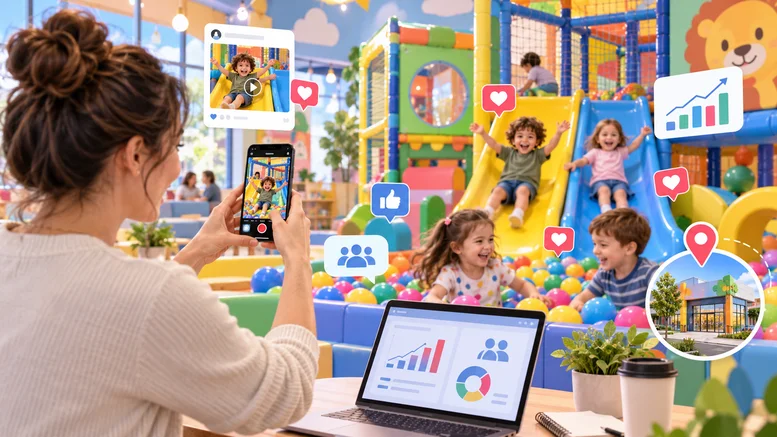
Profitable Summer Camps at an Indoor Playground
Profitable Summer Camps at an Indoor Playground work when you sell structured, pre-booked camp sessions that use your venue during slow weekday hours, control staffing costs, and give parents a clear reason to choose your play center over a generic day camp.
Summer can be awkward for indoor playground owners in the US. Open play often softens when families spend more time outdoors, while rent, insurance, utilities, payroll, and loan payments stay the same. A camp program can turn those quiet weekday blocks into predictable revenue, but only if the offer is designed like an operating system, not a loose collection of crafts and playtime.
This guide covers the pricing, schedule, staffing, safety, marketing, and financial checks that help indoor playgrounds run summer camps with stronger margins.
Why summer camps fit indoor playgrounds
Indoor playgrounds already have the core assets a camp needs: a climate-controlled play floor, party rooms, restrooms, check-in procedures, customer data, and staff who understand family traffic.
The profitable move is to sell a limited-capacity program during the hours when the building is usually underused. For many venues, that means late morning or afternoon weekday blocks (similar to how venues structure group bookings and school field trips).
A camp can help you:
- Fill weekday capacity without discounting open play.
- Pre-sell revenue before summer starts.
- Introduce new families to your venue before birthday season.
- Sell add-ons such as lunch, snacks, extended care, socks, T-shirts, and sibling bookings.
- Give staff more predictable summer hours.
The risk is that a camp also changes your responsibility. Once parents drop children off, you are operating a supervised youth program. That means licensing, waivers, background checks, emergency procedures, allergy controls, and pickup rules need to be handled before the first registration goes live.
Start with the right camp format
The best format depends on your licensing environment, square footage, staffing depth, and local parent demand.
| Format | Best for | Operational notes |
|---|---|---|
| 3-hour themed camp | Play cafes and smaller indoor playgrounds | Easier to staff, easier to run around open play, often a good first-year model |
| Half-day camp | Mid-size playgrounds with a party room or classroom | Allows crafts, active play, snack, and pickup without running a full child care day |
| Full-day camp | Larger family entertainment centers | Higher revenue potential, but requires stronger staffing, meals, rest periods, and compliance planning |
| Drop-in camp days | Filling leftover capacity | Useful for late bookings, but harder for staffing forecasts |
| Weekly camp sessions | Predictable revenue and planning | Usually easier for parents, staff schedules, supplies, and theme planning |
For a first summer, a limited 3-hour or half-day program is usually the cleanest test. You can keep the camp focused, avoid overloading the team, and learn which themes sell before building a larger program.
Check US licensing rules before selling
US camp and child care rules vary by state, and sometimes by city or county. ChildCare.gov explains that child care licensing is handled through state and territory agencies, so an indoor playground should confirm local requirements before advertising a drop-off camp.
Do this before you publish dates:
- Ask your state child care licensing agency whether your camp is licensed, exempt, registered, or outside its scope.
- Confirm whether age, daily duration, total weeks, educational content, meals, or extended care changes your status.
- Check city business license, fire, occupancy, and health department rules.
- Ask your insurer whether your current policy covers drop-off camps.
- Have a local attorney review the waiver, medical authorization, photo release, refund policy, and pickup rules.
Do not assume that calling the program an “enrichment class” or “play camp” changes the legal treatment. The practical question is usually what you do: child age, hours, supervision, activities, meals, and how long the program runs.
Price camp from capacity, not hope
A profitable camp starts with a simple capacity model. Work backward from the number of children you can supervise well, then test whether the revenue covers labor, supplies, payment fees, and marketing.
Use this basic formula:
Weekly camp revenue = campers x weekly price

Weekly gross profit = camp revenue + add-ons - direct camp costs

Direct camp costs = staff wages + payroll costs + supplies + snacks + contractor fees + payment fees + extra cleaning
Fixed costs still matter, but rent is usually already being paid by the indoor playground. The camp should be judged on whether it turns idle hours into contribution margin without damaging birthdays, memberships, or open-play revenue.
Example camp model
This example is a planning model, not a market average. Replace every number with your local wage rates, tuition level, occupancy, and supply costs.
| Item | Example assumption | Weekly amount |
|---|---|---|
| Campers | 24 children | - |
| Weekly tuition | $225 per child | $5,400 |
| Lunch/snack add-ons | 10 families at $35 | $350 |
| Merchandise or camp shirt | 8 shirts at $18 | $144 |
| Gross weekly revenue | $5,894 | |
| Lead instructor | 20 hours at $28 | $560 |
| 2 counselors | 20 hours each at $18 | $720 |
| Payroll taxes and related labor load | Planning estimate | $160 |
| Supplies and crafts | $12 per camper | $288 |
| Snacks and water | $6 per camper | $144 |
| Payment processing | Planning estimate | $180 |
| Extra cleaning and consumables | Planning estimate | $100 |
| Direct weekly costs | $2,152 | |
| Estimated weekly gross profit | $3,742 |
The model gets fragile when enrollment drops below the staffing floor. If 12 children require almost the same staffing as 20 children, the first 12 spots protect your payroll, and the next 8 spots create most of the profit.
Set a minimum enrollment rule
Every session should have:
- A minimum enrollment number.
- A decision date for cancellation or consolidation.
- A refund or credit policy.
- A waitlist process.
- A clear deadline for supply purchasing.
For example, a play center might require 14 paid campers by May 15 to run a specific week. If enrollment is too low, families can move to another week or receive a refund according to the published policy.
Build pricing tiers parents can understand
Parents should understand the camp offer in less than a minute. Avoid too many packages in year one.
A simple structure works well:
| Tier | What it includes | When to use it |
|---|---|---|
| Standard camp | Core camp hours, play, theme activity, snack | Main offer |
| Camp plus lunch | Standard camp plus lunch package | Helpful when parents want fewer daily tasks |
| Extended care | Early drop-off or late pickup | Only offer if staffing and licensing allow it |
| Sibling rate | Small discount for additional children | Good for cart conversion |
| Multi-week bundle | Discount or bonus for 2 or more weeks | Good for predictable summer revenue |
Protect your margin by discounting carefully. (Consider how dynamic pricing for indoor playgrounds can help balance demand.) A $25 early-bird discount can make sense if it helps you lock staffing early. A deep last-minute discount can train parents to wait and can upset families who paid full price.
Better incentives include:
- Free camp T-shirt for early registration.
- Priority theme selection for multi-week campers.
- A small sibling discount.
- Credit toward a birthday party booking.
- Free socks or open-play pass for referrals.
Plan themes that sell repeat weeks
Themes help parents see variety. They also make the same play structure feel new without requiring expensive equipment.
Good indoor playground camp themes are specific enough to sound fun and simple enough for staff to execute.
| Week theme | Activity idea | Active play idea | Add-on opportunity |
|---|---|---|---|
| Dino Discovery | Fossil craft or excavation tray | Dino egg scavenger hunt | Themed snack cup |
| Space Mission | Build a paper rocket | Timed obstacle course | Glow bracelet or space sticker pack |
| Superhero Training | Mask and badge craft | Agility course with stations | Cape photo add-on |
| Kitchen Chemistry | Slime or color mixing activity | Team challenge relay | Take-home experiment kit |
| Under the Sea | Jellyfish craft | Ocean rescue game | Blue smoothie or fruit cup |
| Carnival Week | Prize tickets and simple games | Ring toss, balance, target wall | Popcorn or treat bag |
Keep the curriculum repeatable. Staff should be able to run the week from a one-page plan with supply lists, setup photos, timing, cleanup steps, and backup activities.
Use a daily schedule that reduces chaos
Camp days become expensive when staff spend too much time improvising. A fixed rhythm helps children know what to expect and helps counselors manage energy levels.
Here is a practical 3-hour indoor playground camp schedule:
| Time | Activity | Why it works |
|---|---|---|
| 1:00-1:15 | Check-in, wristbands, restroom reminder | Keeps arrival controlled |
| 1:15-1:45 | Supervised open play | Lets children burn off arrival energy |
| 1:45-2:25 | Theme activity or craft | Uses the party room while focus is higher |
| 2:25-2:40 | Snack, water, handwashing | Creates a reset before active games |
| 2:40-3:20 | Structured challenges | Rotations reduce waiting and crowding |
| 3:20-3:45 | Quiet group activity | Lowers energy before pickup |
| 3:45-4:00 | Pack-up and authorized pickup | Keeps checkout organized |
The final 15 minutes matter. If children are scattered across the structure when parents arrive, pickup slows down and staff attention gets split. End in one controlled zone with bags, crafts, and sign-out materials ready.
Staff for supervision, transitions, and trust
Camp staffing is not the place to run thin. Parents are paying for supervision and safety as much as activities.
A practical staffing setup for a 20-24 child camp might include:
- One lead instructor who owns the schedule, parent communication, and behavior management.
- Two counselors who supervise play, transitions, setup, and cleanup.
- One front desk employee who handles arrivals, late pickups, payments, and general venue traffic.
You may need more staff if your layout has blind spots, mixed ages, bathrooms away from the play floor, food service, children with additional support needs, or open play running at the same time.
Use these staffing rules:
- Never let one adult be isolated with one child out of view.
- Assign staff to zones, not vague “watch the kids” roles.
- Put the strongest staff member on transitions.
- Give every counselor a written emergency role.
- Require photo ID pickup from authorized adults only.
- Keep a daily attendance sheet that moves with the group.
If you use outside instructors for art, dance, STEM, yoga, or sports activities, be careful with worker classification. The IRS has guidance on whether a worker should be treated as an employee or independent contractor. Do not rely on a 1099 label just because the work is seasonal.
Protect the play floor from camp wear and crowding
Camp use is heavier than casual open play. Children move in groups, repeat the same routes, and put more pressure on slides, mats, climbing elements, and party-room furniture.
Before camp starts, map your building into zones:
- Check-in and parent waiting area.
- Camp bag storage.
- Active play zone.
- Quiet activity zone.
- Snack zone.
- Staff-only supply area.
- Sick or waiting area near management.
- Pickup queue.
Then decide whether camp children can mix with open-play guests. In many venues, the better answer is no. Use colored wristbands, signs, scheduled floor blocks, or a physical boundary so staff can immediately identify campers.
For equipment safety, review the US Consumer Product Safety Commission’s public playground safety guidance and follow our indoor playground safety checklist. Indoor playground equipment has its own commercial specifications, and the inspection discipline should be just as strict: check surfaces, anchor points, entrapment risks, trip hazards, fall zones, and damaged components before children arrive.
Build a camp safety packet before registration opens
A strong camp packet reduces parent questions and protects your team from day-one confusion.
Include:
- Camp dates, times, ages, and capacity.
- Drop-off and pickup procedures.
- Authorized pickup rules.
- Late pickup fee.
- Refund, transfer, and cancellation policy.
- Allergy and medication policy.
- Sick child policy.
- Clothing and sock requirements.
- Food and drink rules.
- Behavior expectations.
- Photo and video policy.
- Emergency contact form.
- Medical authorization form.
- Liability waiver reviewed by counsel.
For hygiene, make handwashing part of the schedule, not a vague reminder. CDC handwashing guidance is a useful reference for staff training and parent-facing policies. Build handwashing into arrival, before snack, after restroom use, after messy crafts, and before pickup.
If your camp includes water play, splash pads, pools, or field trips to aquatic facilities, use separate water safety rules. CDC healthy swimming guidance can support parent instructions, but your venue should also follow local pool rules, lifeguard requirements, and insurance conditions.
Market camp before parents finalize summer plans
Summer camp marketing should start before school ends. (See our indoor playground marketing guide for foundational tips.) Many parents build summer coverage in late winter or spring, and the most organized families book early.
Use this timeline:
| Timing | Campaign action |
|---|---|
| January-February | Build themes, pricing, staffing plan, and registration page |
| March | Announce early-bird registration to members and birthday customers |
| April | Run email, SMS, social, and local parent group campaigns |
| May | Push sibling bundles, multi-week bookings, and waitlists |
| June-August | Sell remaining spots, drop-in days, and next-week openings |
Your best audience is already in your system:
- Birthday party families from the past 18 months.
- Members and multi-visit pass holders.
- Parents who attended toddler events but now have school-age children.
- Families who abandoned party or camp checkout.
- Local schools, PTAs, daycares, dance studios, and pediatric offices.
The registration page should answer the decision questions quickly:
- What age group is the camp for?
- What are the dates and hours?
- Is it drop-off?
- What does a typical day look like?
- What is included in the price?
- Are snacks or lunch included?
- Who supervises the children?
- What are the safety and pickup rules?
- What happens if my child has allergies?
- Can siblings attend together?
Sell add-ons without making checkout messy
Camp add-ons work best when they reduce parent work or improve the child’s experience.
Good add-ons for indoor playground camps include:
- Lunch package.
- Snack upgrade.
- Extended care.
- Camp T-shirt.
- Socks.
- Take-home craft kit.
- Friday photo package.
- Open-play pass for another day.
- Birthday party credit.
Avoid adding too many choices. A long checkout can lower completion. Start with two or three add-ons that are easy to fulfill and have clean margins.
Train staff before the first camper arrives
A camp training session should feel practical. Walk the team through the building and rehearse the moments most likely to go wrong.
Cover:
- Arrival script.
- Wristband process.
- Attendance checks.
- Bathroom procedure.
- Allergy and snack rules.
- Injury reporting.
- Parent communication.
- Behavior escalation.
- Cleaning assignments.
- Lost item process.
- End-of-day pickup.
- Emergency evacuation route.
Run a mock transition from play floor to party room. Time it. If staff cannot move the group calmly in practice, the schedule needs more buffer.
Track the numbers every week
A camp can look busy and still underperform. Track the simple numbers weekly so you can adjust while summer is still happening.
Measure:
- Campers booked by week.
- Capacity filled.
- Revenue by tuition, add-ons, and merchandise.
- Labor hours by role.
- Supply cost per camper.
- Refunds and credits.
- No-shows and late pickups.
- New customers added to your database.
- Birthday inquiries from camp families.
- Reviews or testimonials collected.
The most useful metric is gross profit per camp hour. It helps you compare a camp block against open play, private events, parties, or simply staying closed during low-demand hours.
Common mistakes that hurt profit
The biggest camp mistakes are usually operational, not creative.
Avoid these:
- Selling too many age groups in one session.
- Pricing tuition before calculating labor.
- Offering full-day camp without meal, rest, and staffing systems.
- Letting camp children mix with public open play without clear identification.
- Running themes that require expensive supplies or long setup.
- Letting parents book without medical and pickup information.
- Accepting late pickup as a normal inconvenience.
- Using staff who are good at open play but weak at group control.
- Waiting until June to market the program.
- Failing to move low-enrollment weeks into stronger sessions.
One practical rule: if an activity takes longer to set up than to run, simplify it.
FAQ
How long should an indoor playground summer camp be?
A first-year indoor playground summer camp is often easiest to manage as a 3-hour or half-day program. This format gives children enough time for play, a theme activity, snack, and pickup while keeping staffing and compliance more manageable.
What ages work best for indoor playground camps?
School-age children are usually easier to serve in a drop-off camp than toddlers or preschoolers. Younger children may trigger different licensing, staffing, restroom, nap, and separation requirements, so confirm your state rules before accepting them.
How many campers should an indoor playground accept?
The right capacity depends on usable space, sightlines, staff ratios, bathroom access, age mix, and whether open play runs at the same time. Start with a conservative cap, then increase only after the team proves it can manage check-in, transitions, activities, and pickup without stress.
Should camps be sold by the day or by the week?
Weekly registration is usually easier for staffing, supplies, and revenue forecasting. Daily drop-ins can fill leftover capacity, but they should not make the core program harder to plan.
What is the best way to make camp more profitable?
The fastest path is to protect enrollment, labor, and add-on margin. Sell early, set a minimum enrollment number, schedule staff only around real camp needs, and offer simple add-ons such as lunch, socks, T-shirts, or extended care when your rules allow them.
Sources
- ChildCare.gov: What Is Child Care Licensing?
- IRS: Independent Contractor or Employee?
- CDC: About Handwashing
- CDC: Guidelines for Healthy and Safe Swimming
- US CPSC: Public Playground Safety Handbook
Want to sell summer camp spots without adding more phone calls to the front desk? Add online registration to your website so parents can choose a week, complete the waiver, list allergies and pickup contacts, pay the deposit, and receive confirmation before your staff gets involved.