An indoor playground cleaning checklist helps your team clean soft play structures, slides, ball pits, restrooms, party rooms, and high-touch surfaces on a clear schedule. This article gives you a practical daily, weekly, and monthly checklist that a manager can adapt for opening duties, closing duties, deep cleaning, and staff accountability.
Indoor playgrounds get messy fast. Kids crawl, climb, sweat, sneeze, spill drinks, touch rails, and put their hands on almost every surface. A strong routine removes visible dirt, reduces germs, protects soft materials, and gives staff proof that the work was done.
Printable Indoor Playground Cleaning Checklist
Use this printable checklist as the main shift tool. Print one copy for each shift, keep it at the front desk or staff room, and move detailed notes, photos, repairs, and incident records into your digital log.
| Frequency | Area | Checklist Item | Done |
|---|---|---|---|
| Date | Shift | Staff member | |
| Daily morning | Full play area | Walk the structure, remove trash, check for damage, and confirm no unsafe area is open. | [ ] |
| Daily morning | Floors and mats | Vacuum loose debris, mop hard floors, and dry wet areas before opening. | [ ] |
| Daily morning | High-touch points | Wipe and disinfect rails, handles, gates, steps, slide sides, tablets, and counters. | [ ] |
| Daily morning | Restrooms | Clean, disinfect, restock, empty trash, and check odor. | [ ] |
| Daily during shift | Play floor | Remove spills, crumbs, loose debris, and damaged toys as soon as staff see them. | [ ] |
| Daily during shift | Ball pit | Spot-check for food, wet items, broken balls, and foreign objects. | [ ] |
| Daily closing | Soft play | Clean visible soil, disinfect approved surfaces, and leave padding dry overnight. | [ ] |
| Weekly | Ball pit | Remove balls, clean and sanitize balls, vacuum pit, disinfect liner, and dry fully. | [ ] |
| Weekly | Slides and tunnels | Wipe interiors, remove sticky residue, inspect seams, and report rough surfaces. | [ ] |
| Weekly | Nets and fasteners | Check nets, ropes, foam covers, bolts, caps, zip ties, and emergency paths. | [ ] |
| Monthly | Hidden areas | Move equipment, clean behind storage, vacuum vents, and dust upper structure areas. | [ ] |
| Monthly | Maintenance | Check access panels, connectors, padding, warning signs, gates, latches, and barriers. | [ ] |
| Notes | Repairs | Supplies needed |
For disinfectants, follow the product label and verify approved products through the EPA List N search tool. The CDC cleaning and disinfecting guidance is also useful for staff training. Your day-to-day process should stay short enough for employees to follow during busy shifts.
Daily Indoor Playground Cleaning Checklist
Daily cleaning should happen before opening, throughout the day, and after closing. Busy centers may need short cleaning rounds every 30 to 60 minutes.
Before Opening
Walk the full play area before guests arrive. Remove trash, lost items, crumbs, and loose debris. Vacuum floors, mats, carpeted areas, and party rooms. Check under benches, tables, shoe cubbies, and stroller areas. Wipe reception counters, gates, handles, tablets, and payment terminals. Clean entry mats, restock supplies, and confirm that restrooms are clean, dry, stocked, and odor-free.
High-Touch Play Surfaces
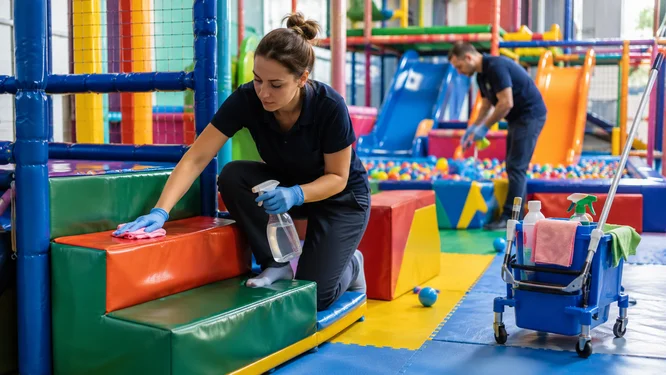
Focus on the places children grab repeatedly: stair rails, climbing grips, crawl tunnel entrances, slide side rails, foam steps, gate latches, interactive panels, ball pit edges, and toddler toys.
Clean visible soil first with mild detergent and water. Then apply disinfectant according to the label. Avoid soaking foam, seams, vinyl padding, stitched areas, and porous materials. Trapped moisture can cause odors, mold, and faster material breakdown.
Floors, Mats, and Padding
Sweep or vacuum grit before mopping. Sand and small debris can scratch vinyl, PVC, and coated foam. Mop hard floors with the correct solution and let them dry before reopening the area.
For soft play mats and padded blocks, wipe with a damp microfiber cloth, use mild soap for sticky spots, disinfect only with approved products, and dry the surface fully. Remove any block with torn vinyl, exposed foam, or loose seams.
Restrooms and Food Areas
Keep restroom tools separate from play-area tools. A simple color system works well: red for restrooms, yellow for food areas, blue for play equipment, and green for general surfaces.
Clean and disinfect toilet seats, flush handles, sinks, faucets, door handles, baby changing stations, cafe tables, high chairs, counters, and vending touchpoints.
Body Fluid Incidents
Close the affected area immediately after vomit, blood, urine, feces, or other body fluid contamination. Use gloves, remove solid material first, clean the surface, then disinfect with a product suitable for the hazard and surface. OSHA guidance stresses PPE, clean work surfaces, and label instructions: OSHA biological hazards guidance.
Log the time, location, staff member, product used, and reopening time.
Weekly Indoor Playground Cleaning Checklist
Weekly cleaning goes deeper than daily surface work. Schedule it outside public hours so staff can move equipment, open access points, and let surfaces dry.
Ball Pit Cleaning
Ball pits need careful cleaning because saliva, hair, dust, crumbs, and small debris settle at the bottom. At least once a week, remove the balls, wash and sanitize them with a commercial machine or approved batch process, vacuum the empty pit, clean and disinfect the liner, and let everything dry before refilling. Remove cracked, crushed, sticky, or damaged balls.
If food, vomit, urine, feces, or blood enters the ball pit, close it right away and run a full cleaning cycle before reopening.
Slides, Tunnels, and Crawl Spaces
Slides and enclosed tunnels collect sweat, dust, and moisture. Weekly, wipe interior surfaces, remove sticky residue, check for cracks or rough seams, and dry everything completely. Report any slide that suddenly slows children down or feels rough.
Avoid abrasive pads on acrylic windows, plastic domes, and clear panels. Use microfiber cloths to prevent scratching.
Nets, Ropes, Foam Covers, and Fasteners
Cleaning time is also inspection time. The CPSC Public Playground Safety Handbook highlights hazards such as entrapment, sharp points, protrusions, and structural wear. Indoor operators should build those checks into weekly cleaning, often using a dedicated safety inspection checklist.
Each week, inspect nets for cuts, loose knots, and fraying. Check rope bridges, suspended elements, exposed metal, loose bolts, missing caps, broken zip ties, foam pipe covers, emergency exits, and internal paths.
Monthly Indoor Playground Cleaning Checklist
Monthly work should reset the whole facility. This is when your team reaches areas that get missed during normal shifts.
Deep Cleaning Tasks
Move freestanding equipment and clean underneath. Vacuum vents, high ledges, ceiling corners, and upper net areas. Clean behind arcade machines, lockers, benches, and shoe storage. Wash walls near party rooms and snack areas. Deep clean carpets or entry mats, clean HVAC grilles, dust top rails, and check pest-prone areas for crumbs and spills.
Equipment Condition Review
Once a month, inspect the structure with a maintenance mindset. Check hidden connectors and access panels, tighten loose hardware according to manufacturer guidance, look for worn padding, sagging nets, damaged vinyl, and loose seams, confirm that warning signs are readable, and test gates, latches, and barriers.
If your equipment follows ASTM soft contained play equipment standards or manufacturer inspection requirements, keep dated records with staff names and photos. Good documentation helps with insurance, maintenance planning, and parent confidence.
Related Operating Guides
Use this article with our guides on how to hire and train staff for an indoor playground, indoor playground equipment suppliers and material specifications, membership programs for indoor playgrounds, how to attract parents to your indoor playground, and indoor playground trends reshaping U.S. play.
Staff Rules That Keep the Checklist Working
Train the team to clean visible dirt before disinfecting, follow contact time, never mix chemicals, keep restroom tools separate, dry soft surfaces fully, and close unsafe equipment immediately.
Parents notice clean floors, fresh restrooms, dry mats, and fast spill response. They also notice sticky rails, dirty socks, odors, and overflowing trash. A consistent daily, weekly, and monthly routine makes cleanliness visible, protects your equipment, and gives every shift the same standard to follow.