A local review analysis finds that birthday venues compete visibly on attractions but earn—or lose—their reputations disproportionately through service operations.
Parents comparing kids birthday party venues in Greater Los Angeles search for slides, trampolines, playgrounds and party rooms. Once the party is over, however, reviewers talk far more about the people running it.
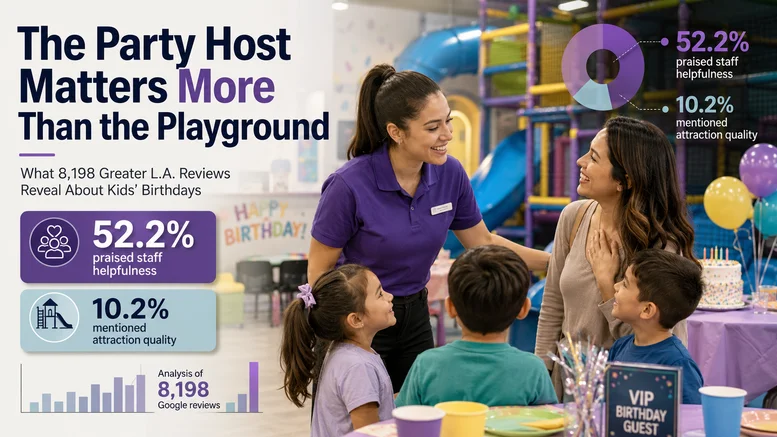
Among 1,083 five-star birthday-party reviews, 52.2% praised staff helpfulness, 36.8% praised party coordination and 34.8% praised the host or animator. Only 10.2% positively mentioned attraction quality, while roughly 7% mentioned the party room.
Those reviews were part of a larger analysis of 8,198 public Google reviews from 60 venue profiles across 36 Greater Los Angeles cities. The dataset included 1,237 reviews explicitly identified as birthday-related.
For this analysis, Kids Party Venues provided the dataset covering children’s venues across Greater Los Angeles.
The contrast exposes a consequential mismatch for indoor playgrounds, family entertainment centers, trampoline parks, play cafés and other birthday businesses: marketing is attraction-heavy, but reputation is service-heavy. For children, the attraction may be the product. For the adult organizing the birthday, the product is execution.
Review mentions measure what people voluntarily chose to discuss, not a ranked survey of consumer priorities. With that distinction in mind, the size and consistency of the gap are difficult to ignore.
Key findings
In five-star birthday reviews
52.2% praised staff helpfulness, compared with just 10.2% that positively mentioned attraction quality.
36.8% praised party coordination
34.8% praised the host or animator
~7% positively mentioned the party roomIn birthday reviews rated one to three stars
63.9% contained a staff-related complaint
48.1% contained a booking or communication complaint
36.1% contained a party-execution complaint
25.9% contained a pricing complaintDataset: 8,198 reviews, including 1,237 explicitly birthday-related reviews, from 60 Google profiles across 36 Greater L.A. cities.
Parents book the playground. They review the people.
In five-star birthday reviews, the most prominent topics involved human help and operational control. Staff helpfulness appeared in 52.2%, party coordination in 36.8%, and host or animator quality in 34.8%. Attraction quality appeared in 10.2%, attraction variety in 10%, and the party room itself in roughly 7%.
Helpful staff was therefore mentioned about 7.4 times as often as the party room. A positive host appeared about five times as often. Party coordination appeared more than 3.5 times as often as attraction quality.
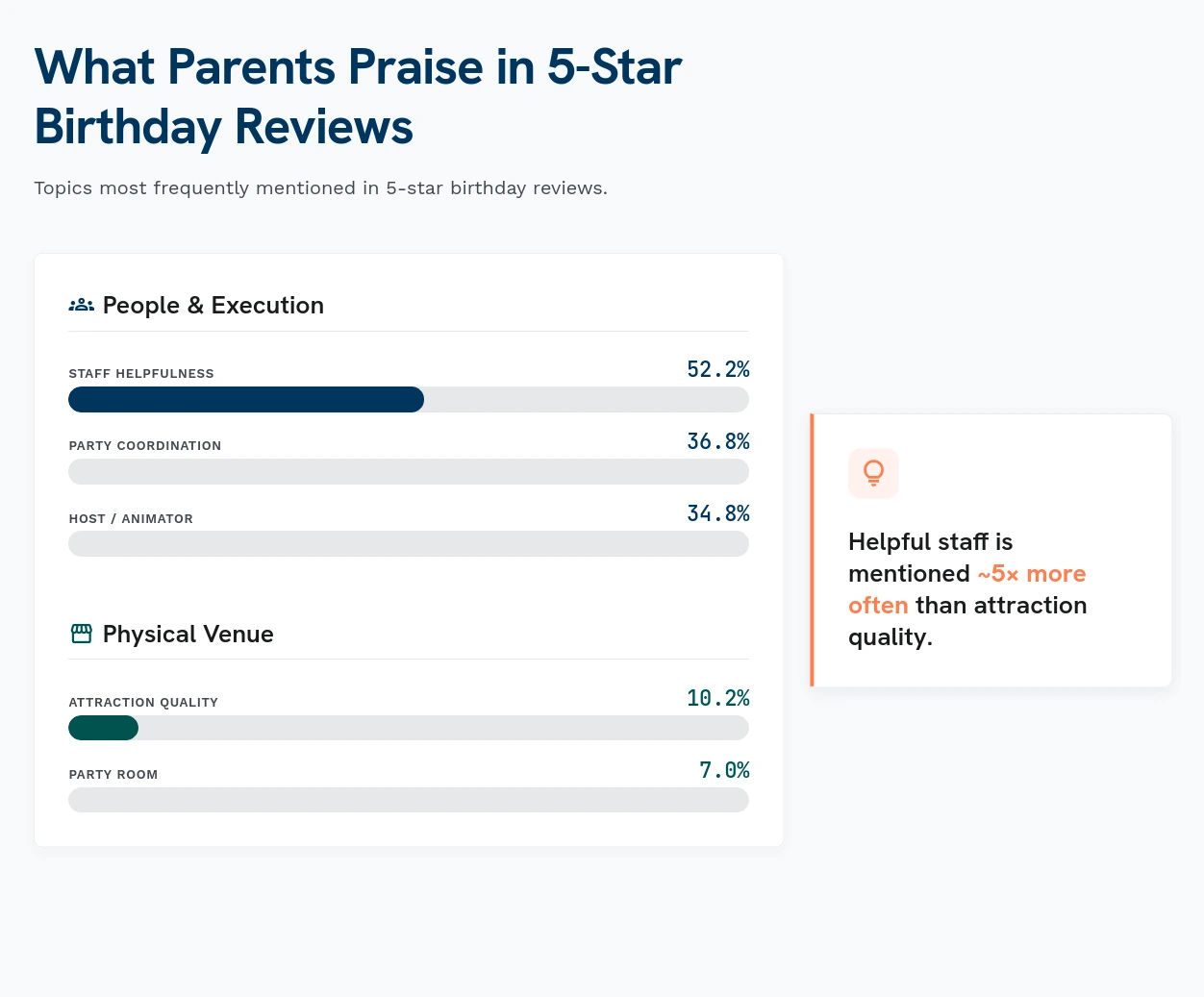
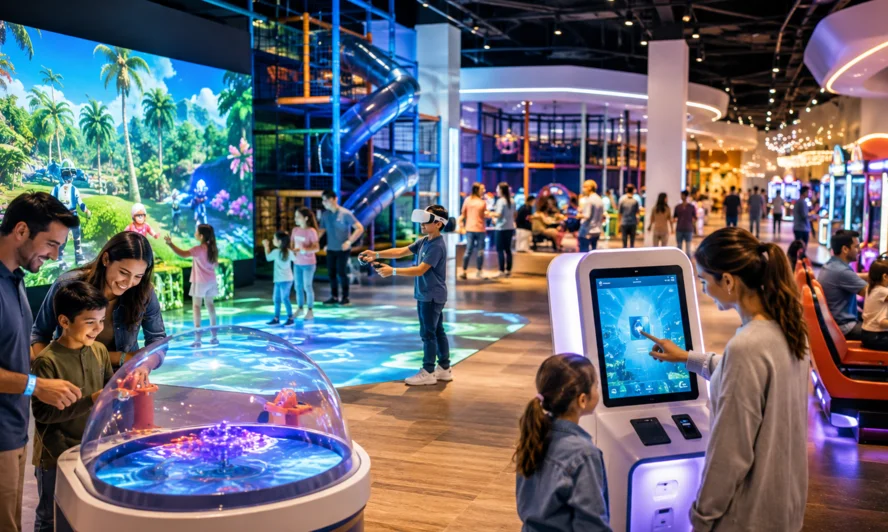
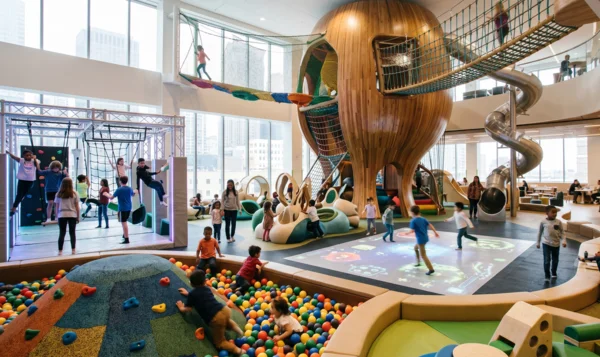
This is the central contradiction in the birthday-party business. The venue sells what photographs well: bright equipment, themed spaces, climbing structures, trampoline courts and arcade games. The organizer experiences something harder to photograph: whether a staff member answers questions, whether the room is ready and whether someone keeps the event moving when a group of excited children arrives at once.
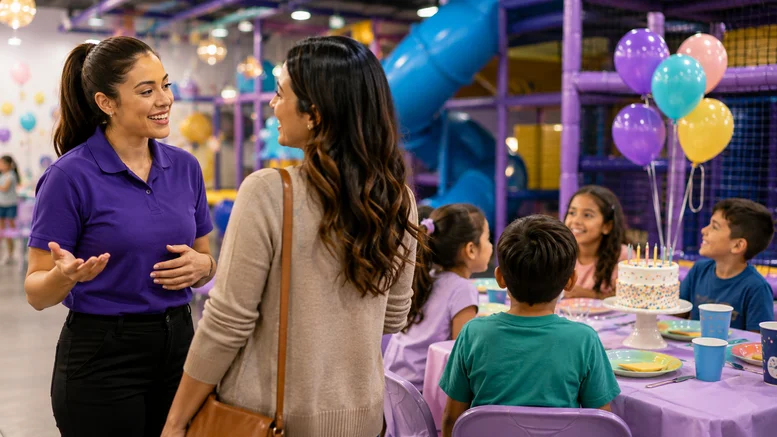
A dedicated host can connect the entire experience. The role may include greeting the group, explaining the schedule, directing guests, coordinating food and managing the transition into the party room. More important than any single task is ownership: the organizer knows who is responsible for the event.
That is why party hosting should not be treated as a minor package amenity. In the review record, the host is part of the core product.
Greater L.A. here means 36 cities—not just Los Angeles
The geography behind this analysis is broad. The 60 profiles include locations listed in Los Angeles, Woodland Hills, Santa Monica, Pasadena, Glendale, South Gate and Long Beach. The dataset also reaches western Greater L.A. locations such as Thousand Oaks and Oak Park and Orange County cities including Fullerton, Buena Park and Huntington Beach.
That footprint matters. It covers different local submarkets and several venue formats rather than one neighborhood or one type of operator. Review volume was also uneven: the 10 largest profiles supplied approximately 56% of all reviews. A separate equal-profile analysis, discussed below, found that the central staff-versus-attractions pattern persisted instead of disappearing when the largest locations no longer dominated the calculation.
Here, “Greater Los Angeles” refers to this 36-city venue set, not only to the City of Los Angeles and not to a census of every birthday venue in the region.
The birthday can start going wrong before the kids play
The dataset is strongly positive overall. Its average rating was approximately 4.62 out of 5, and 85.2% of all 8,198 reviews had five stars. The revealing contrast is between what appears in exceptional birthday experiences and what surfaces when the operating chain breaks.
Within the birthday subset, 108 reviews carried ratings of one to three stars. Of those, 63.9% contained a negative staff topic, 48.1% a booking or communication problem, and 36.1% a party-execution problem. Crowding appeared in 21.3% and safety in 19.4%.
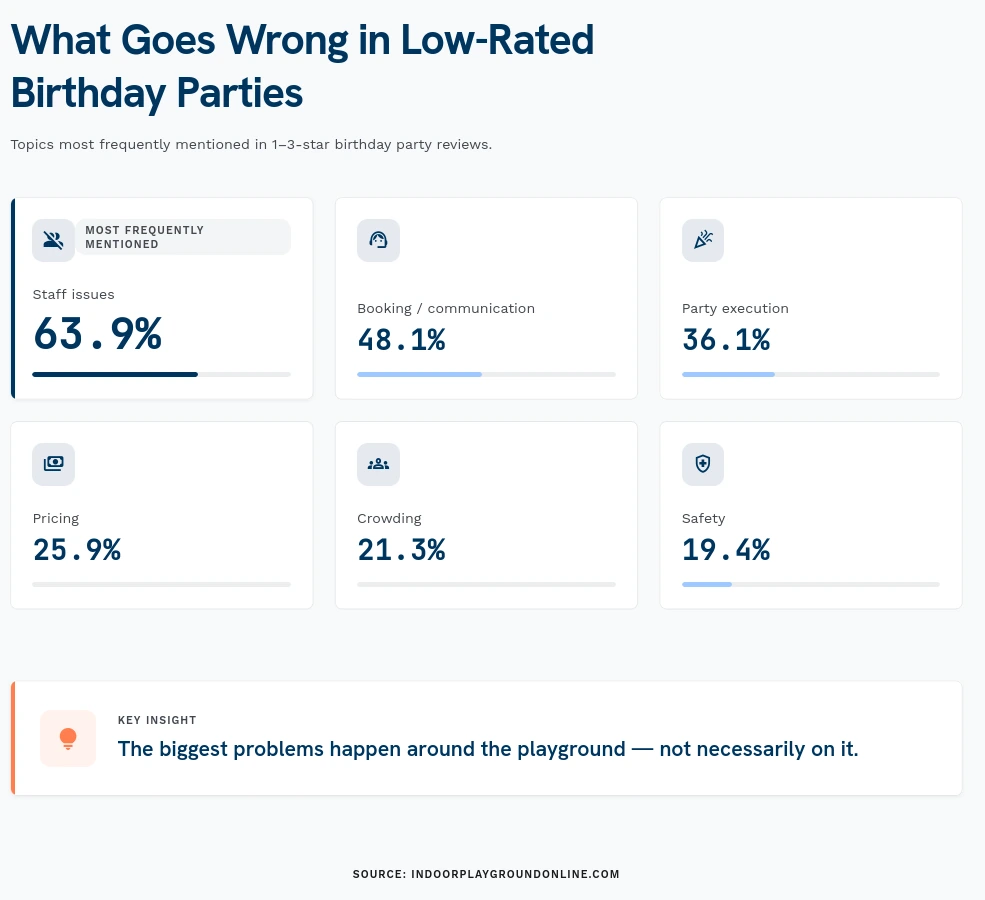
The granular topics show where the chain was most exposed. Staff attitude appeared negatively in 36.1% of low-rated birthday reviews. Booking-process problems appeared in 31.5%, party-coordination problems in 23.1%, and communication before the party in 11.1%.
A venue birthday is a sequence of handoffs: inquiry to reservation, reservation to arrival, check-in to play, play to the party room, then food, cake, payment and departure. A mistake early in that sequence can travel. Unclear package terms can become a dispute at check-in. A late room turnover can affect setup, food and cake. If nobody owns the event, every delay becomes the organizer’s problem.
The playground is a feature. The birthday is a timed service involving children, adults, food, capacity and expectations set before anyone enters the building. That operational complexity is where many low-rated birthday reviews concentrate.
What this means for venue operators
Operators can spend heavily on a new play structure, a larger trampoline court, a themed party room or visual upgrades. Those investments are easy to display online and may help a venue win the initial booking. The review evidence suggests that public reputation after the party is more exposed to staffing, host quality, training, booking systems, handoffs, crowd management, supervision and pricing transparency.
The visible product may win the booking. The invisible operating system may determine the review.
Zooming out from birthday parties to the full dataset reinforces that point. Across all 8,198 reviews, some staff-related aspect appeared in 54.1%, compared with 37.5% for attractions and 23.8% for cleanliness. Among the 800 reviews rated one to three stars, 47% contained a negative staff issue. Negative staff attitude alone appeared in 29.4%; a broken attraction appeared in 6.5%.
That does not translate into generic advice to “provide good service.” It identifies where the birthday product is most exposed. Operators can audit whether the booking record reaches the floor team accurately, whether the host’s responsibilities are explicit, whether room turnover has a real buffer, whether supervisors can see capacity problems developing and whether the final bill matches the package explanation.
It also changes how capital and operating decisions should be compared. A physical upgrade can be valuable, but the review data suggests it should not automatically outrank host training, adequate coverage at peak times or a birthday party booking workflow that eliminates surprises. Those less-visible systems repeatedly appear in the customer record.
The equal-profile check makes the signal more credible. Because the largest profiles contributed a disproportionate share of reviews, the analysis was repeated with each venue profile effectively given equal weight. Staff still appeared in approximately 55% of reviews per profile, compared with roughly 37.5% for attractions and 28% for cleanliness. Among profiles with at least five birthday reviews, staff and birthday execution each appeared in roughly 60%, versus approximately 27% for attractions.
Safety is an operating outcome, too
Zooming out from the 108 low-rated birthday reviews to all 800 low-rated reviews, negative safety topics appeared in 23.8%. Within that full low-rated group, 10.3% mentioned insufficient supervision, 7.1% mentioned unsafe behavior by other children or guests, and 5.9% mentioned an injury.
The operational signal is more useful than the familiar statement that families care about safety. A venue can have appropriate equipment yet still feel poorly controlled if rules are not enforced, capacity is mismanaged or staff do not respond to risky behavior. For operators, supervision and crowd management are part of the guest experience as well as the safety function.
The price problem isn’t always the price—it’s the surprise
Returning to the 108 low-rated birthday reviews, 25.9% contained a negative pricing topic, 12% raised a value-for-money concern, and 10.2% mentioned a hidden fee.
The clearer interpretation is about predictability, not a specific acceptable price. A birthday package creates expectations about what is included, what the host handles and what the organizer will owe. Trust is vulnerable when service charges, gratuity expectations, per-child costs or paid add-ons become clear only after the booking decision.
Across a dataset that spans 36 cities and multiple venue formats, raw package prices are not directly comparable. Final-price clarity is. Operators should be able to explain the likely total before taking a deposit and ensure that the same package information follows the booking from the sales conversation to the party-day team.
Parents do not necessarily demand cheap parties. They demand predictable ones.
The L.A. surprise
Among low-rated birthday reviews, 48.1% mentioned booking or communication problems. Only approximately 6.5% contained a negative parking-related issue.
Even in Greater Los Angeles, communication appears far more often than parking in disappointing birthday-party reviews.
Cleanliness becomes more prominent as the age group gets younger
This finding comes from the full review dataset, not only the birthday subset. General cleanliness appeared in 1,701 of 8,198 reviews, or 20.7%. When general cleanliness was mentioned negatively, more than 90% of those negative mentions came from reviews rated one to three stars.
Among reviews where the child’s age group could be identified, a cleanliness-related aspect appeared in 35.6% of reviews involving ages 0–3. The share fell to 28.9% for ages 4–6, 23.6% for ages 7–9 and 21.6% for ages 10 and older.
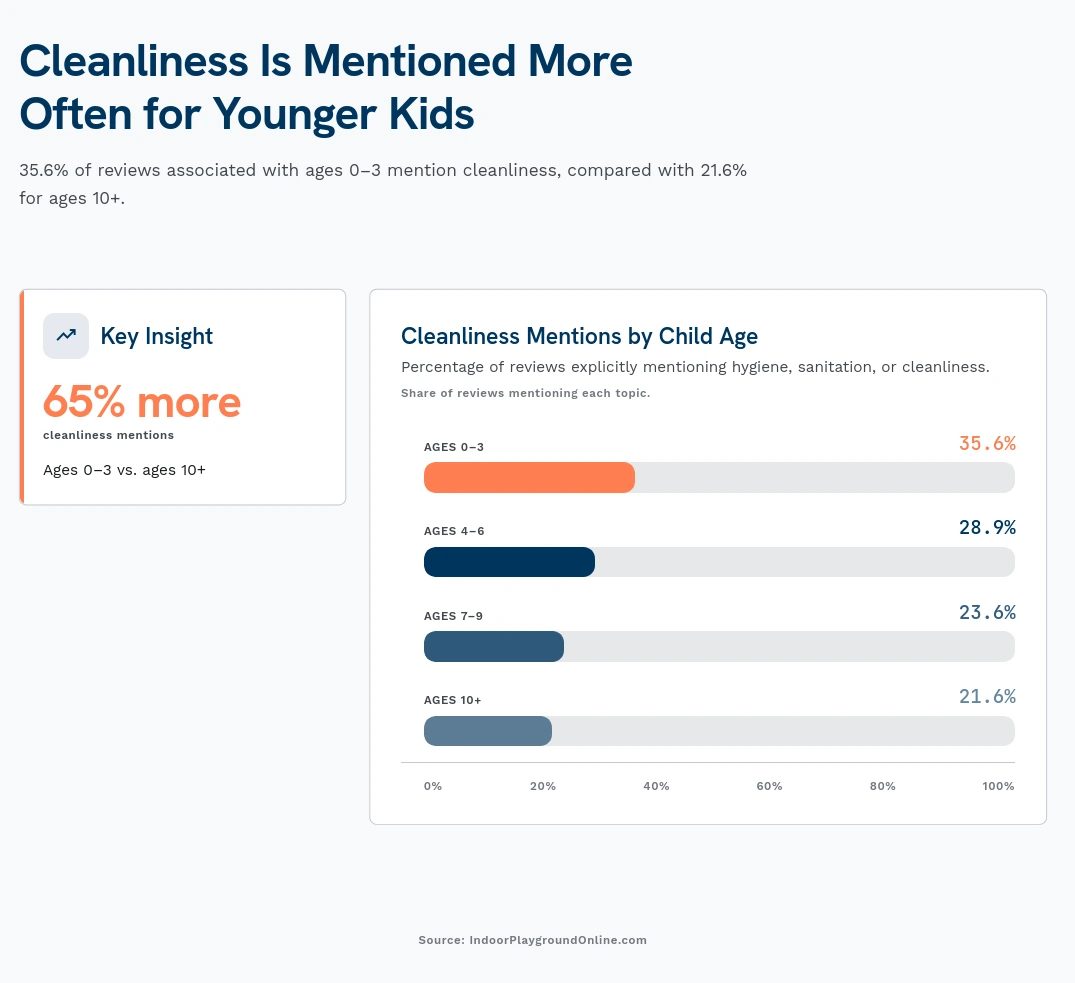
The dataset cannot tell us why this difference exists. It shows only that, among reviews with enough context to identify an age group, cleanliness became progressively more prominent as the age group became younger. That makes age mix an important lens for operators interpreting their own cleanliness feedback; a play café focused on toddlers may see a different review signal from a venue serving older children.
What the data suggests parents should ask before booking
Parents looking at kids birthday party venues across Greater Los Angeles can use seven questions to test the less-visible parts of the experience:
- Will we have a dedicated party host?
- What exactly will that host handle?
- Who is our contact before the event?
- When do we get access to the party room?
- How is the play area supervised when the venue is busy?
- What exactly is included in the package?
- What fees, gratuities or add-ons can be added to the advertised price?
These questions reflect the topics that separated many high- and low-rated birthday reviews. They also reveal whether the package is supported by a repeatable process or depends on the organizer resolving ambiguity on party day.
What venues market and what reviewers remember
The most useful finding is not that families want fun, cleanliness or safety. Those expectations are already obvious. The original signal in these 8,198 reviews is the scale of the service gap: 52.2% staff helpfulness versus 10.2% attraction quality in five-star birthday reviews, followed by 63.9% staff complaints and 48.1% booking or communication complaints in low-rated birthday reviews.
For Greater L.A. operators, that gap reframes the birthday product. Attractions create demand and define age fit. Service operations decide whether the promised event survives contact with a busy weekend schedule.
The attraction gets families through the door. The execution determines what they say afterward.
Methodology
This analysis used 8,198 public Google reviews in a source dataset supplied by Kids Party Venues. The reviews came from 60 Google profiles representing approximately 50 children’s venues across 36 cities in the Greater Los Angeles dataset. The set includes Los Angeles County, Orange County and western Greater L.A. locations such as Thousand Oaks and Oak Park.
Of the full dataset, 1,237 reviews were classified as explicitly birthday-related. The review text was classified across 154 granular aspects and broader themes, with sentiment evaluated at the aspect level. Visit context and child age were assigned only when the text contained sufficient evidence. Approximately 75% of reviews did not provide enough information for a confident visit-context classification, so birthday-specific findings use only the explicitly identified birthday subset.
Review volume differed substantially by profile. The 10 largest profiles accounted for approximately 56% of all reviews. A secondary analysis effectively gave profiles equal weight. The headline pattern persisted: staff appeared in approximately 55% of reviews per profile, attractions in roughly 37.5% and cleanliness in roughly 28%. Among profiles with at least five birthday reviews, staff and birthday execution each appeared in approximately 60%, compared with roughly 27% for attractions.
The findings describe patterns within public reviews, not a representative survey of Greater Los Angeles families. Reviewers may differ from people who do not post reviews, and automated topic classification involves interpretation. Reviews can contain multiple topics, so percentages are not intended to sum to 100%.
The source export represented review dates from approximately August 29, 2025, through August 31, 2026. Dates were unusually concentrated on recurring calendar dates, possibly because relative Google review dates were normalized during data collection. No month-to-month, seasonal or year-over-year trend analysis was performed.